Join TAGU · Graduate study
Study animal breeding and genetics at Kasetsart
Master's and Ph.D. research in animal breeding and genetics at Kasetsart University: real farm data, genomics and partners from Bangkok to Florida.
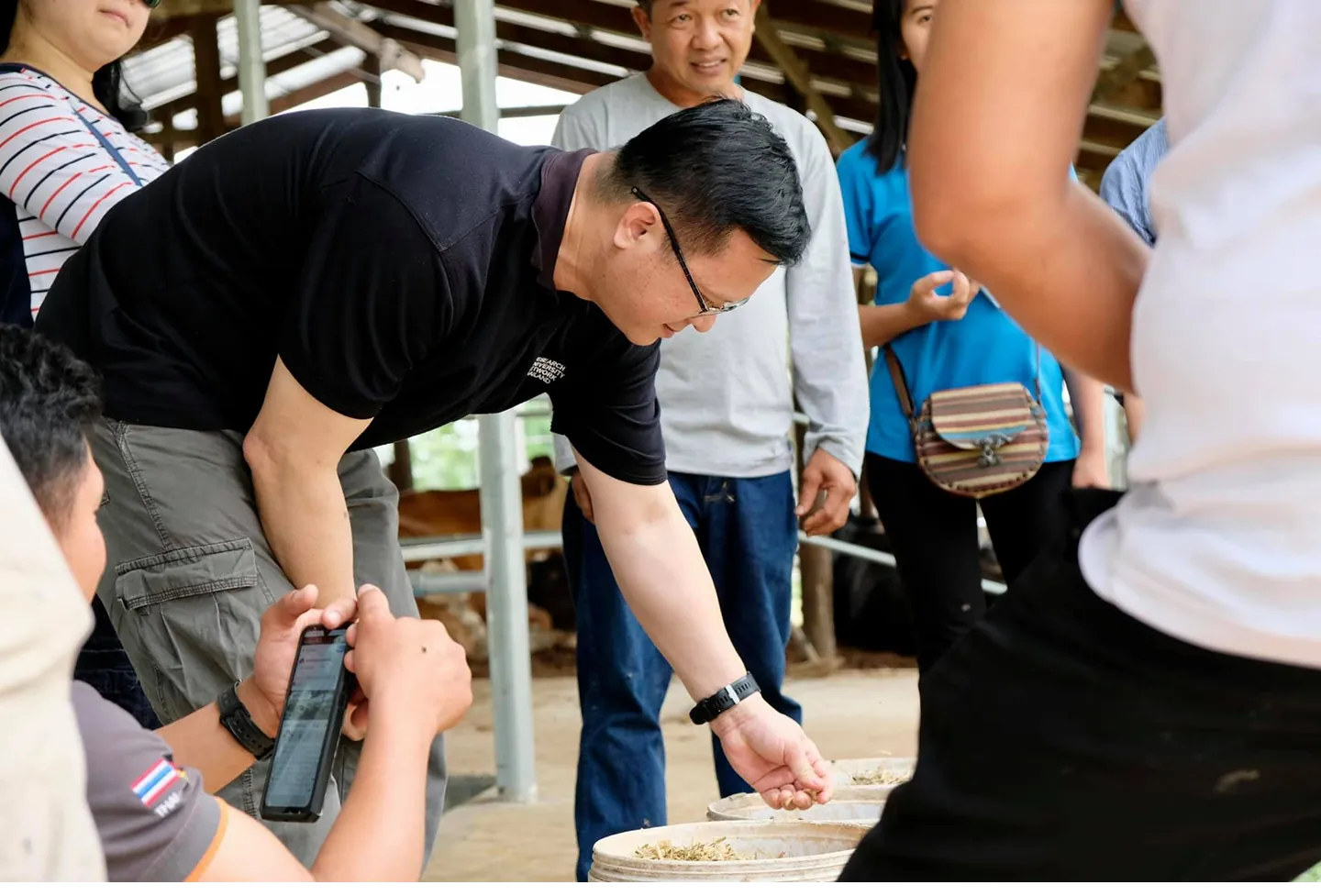
Research areas and skills
What you will work on
Research areas
Skills you will build
Quantitative genetics
Heritability, breeding values, selection indexes and mating plans.
Genomic selection
DNA markers that predict an animal's genetic merit earlier and more accurately.
Data science and programming
Cleaning large farm datasets, fitting statistical models, writing reproducible code.
Field work with partners
Farms, cooperatives and industry partners: where the data comes from.
International collaboration
Long-standing links with the University of Florida and a joint Ph.D. with Nagoya.
What students here research
Ph.D. · 2025
Genetic improvement for economically important traits of snakeskin gourami (Trichopodus pectoralis)
Onprang Sutthakiet
Ph.D. · 2021
Genetics of Thai red junglefowl and indigenous chickens (KU–Nagoya University joint degree)
Ayano Hata
Master's · 2021
Genetic analysis for body weight and survival of giant freshwater prawn (macrobrachium rosenbergii)
Rangsrid Chaicharim
Student life at TAGU
On farms, in the lab and at conferences
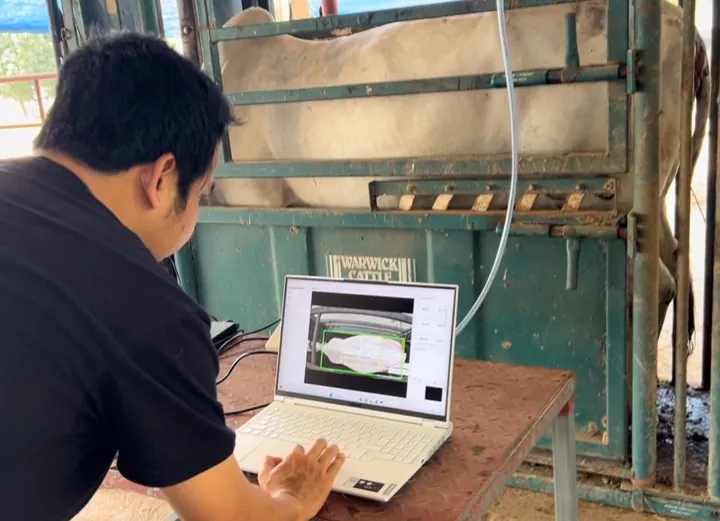
Mar 2026
Testing AI phenotyping
A Ph.D. student measures Brahman cattle from images, Suphan Buri
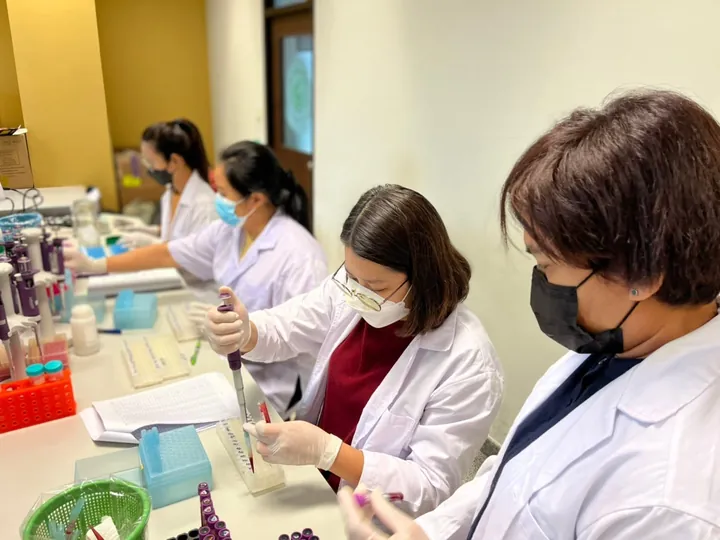
Jul 2022
DNA extraction in the lab
Dairy blood samples for genomic evaluation
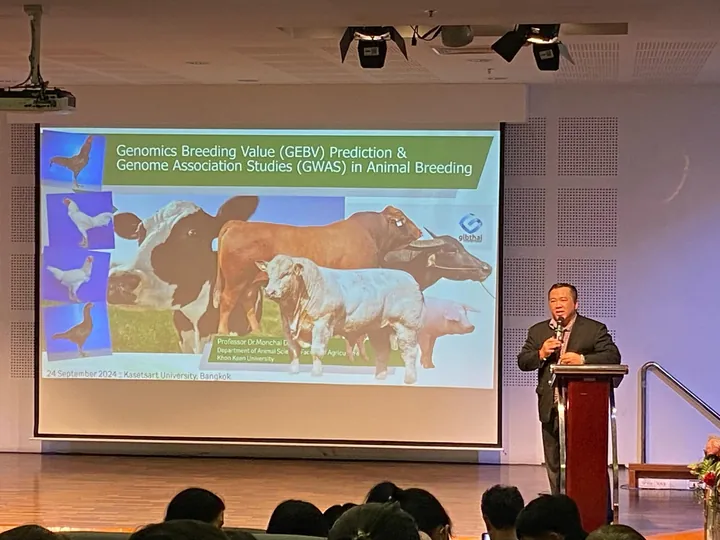
Sep 2024
Genotyping array lecture
GWAS and genomic selection for breeding and conservation
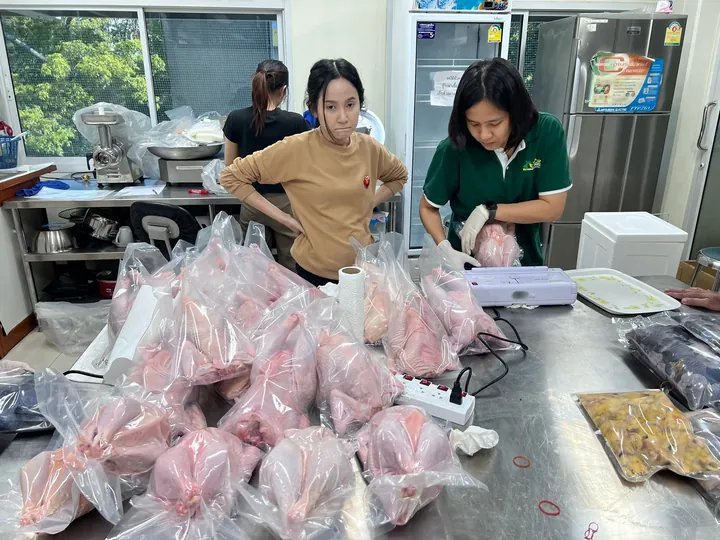
Apr 2026
Carcass and meat data
Part weights and meat colour of Nil Kaset and Betong chickens
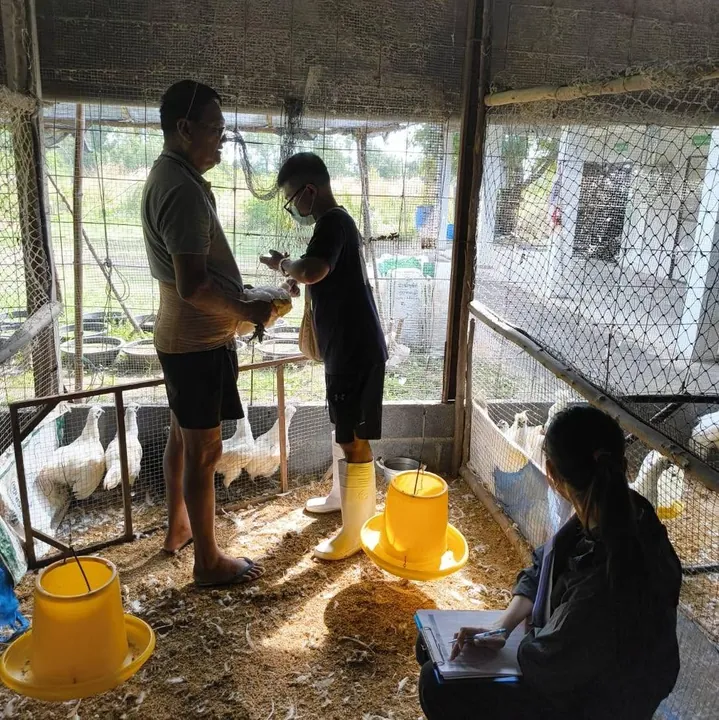
Nov 2025
Recording chicken phenotypes
Crest size and skin colour (L*a*b*) of 16-week-old chickens
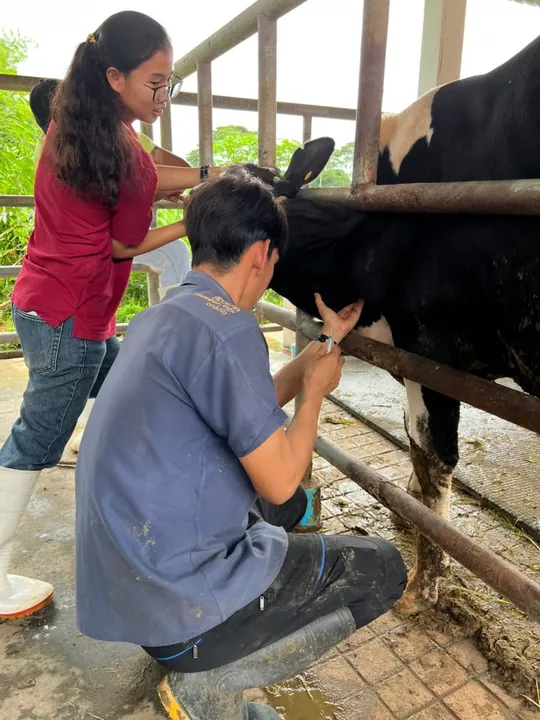
Jul 2022
Blood sampling for genomics
48 DPO young bulls and farmers' cows, Muak Lek
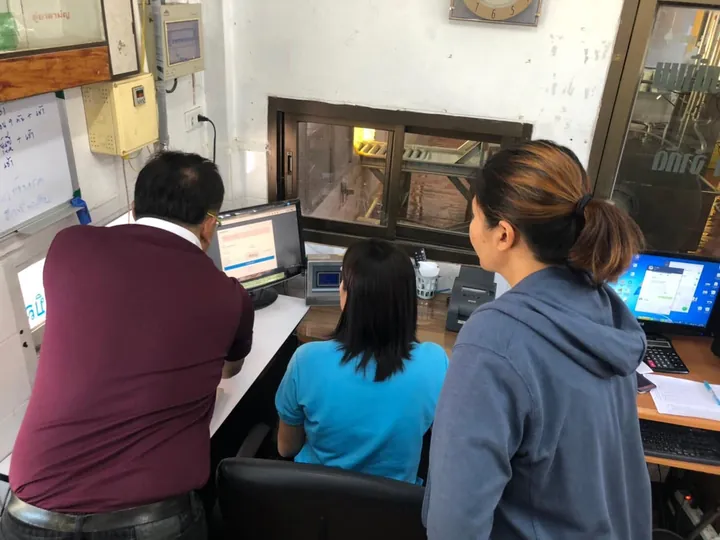
Oct 2019
Data session with a dairy co-op
Milk quality and yield per farm, Khon Kaen
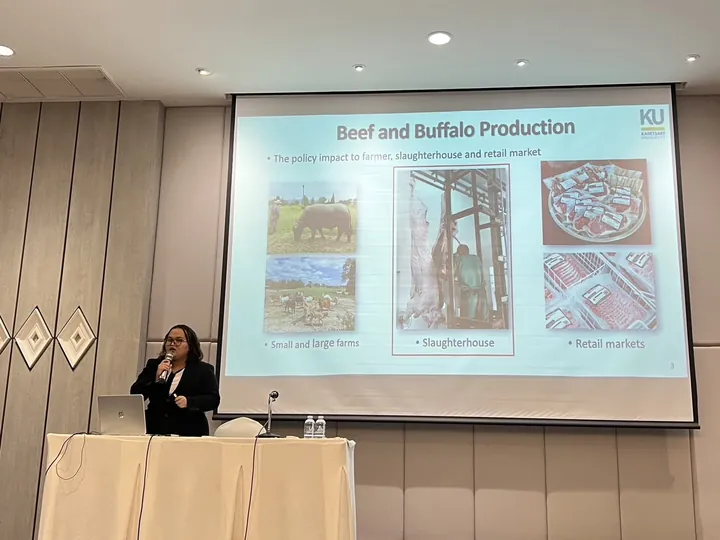
Aug 2024
Seven talks at NASCoT 12
12th National Animal Science Conference, Cha-am
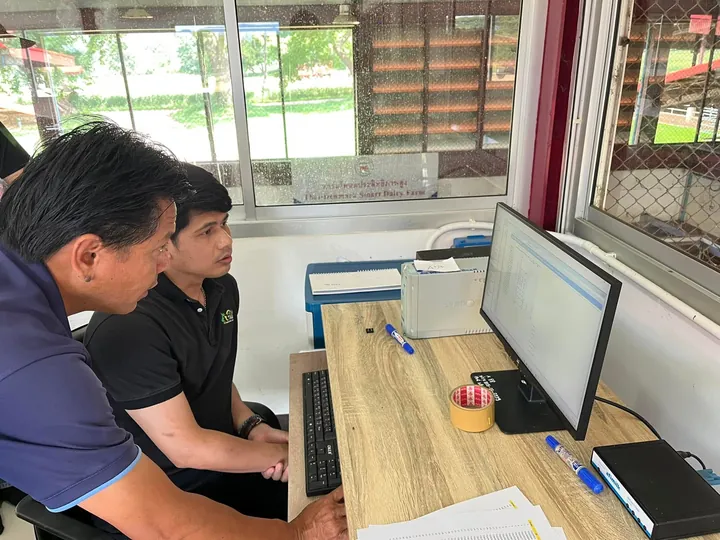
Jun 2026
Daily milk-yield data
An M.S. student at the DPO high-efficiency dairy farm
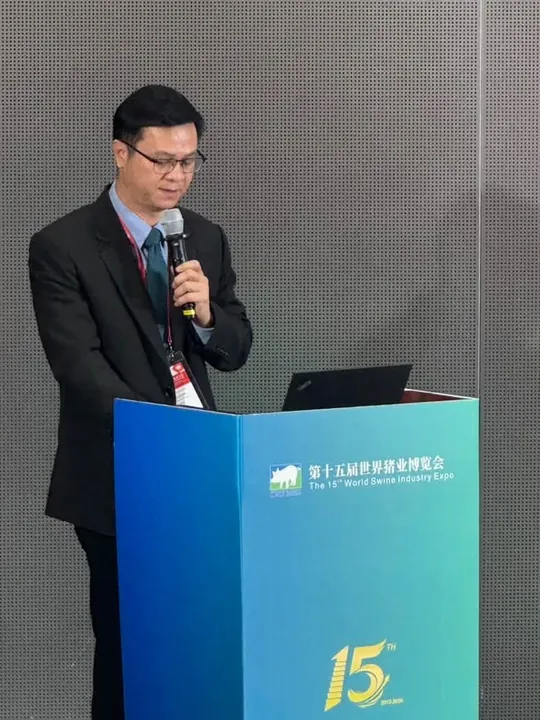
Oct 2026
15th Leman China Swine Conference
Zhengzhou, China: the TAGU team with the Animal Husbandry Association of Thailand
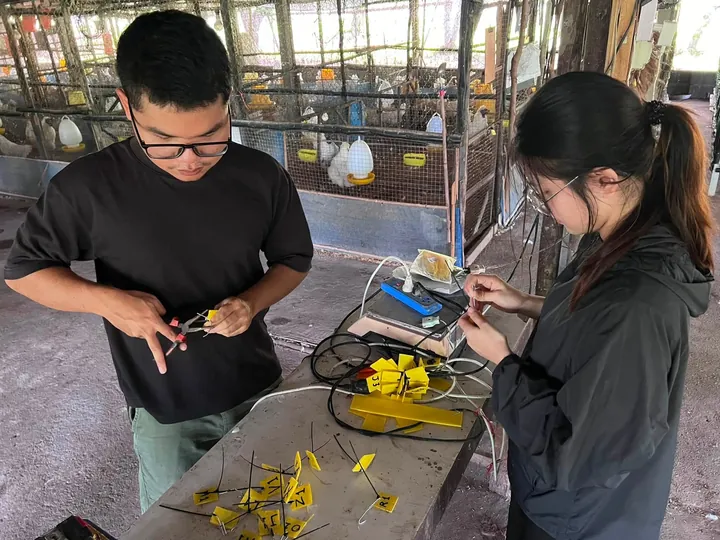
Jul 2026
Tagging replacement chicks
ID wing bands and records for Kai Dam Nil Kaset chicks
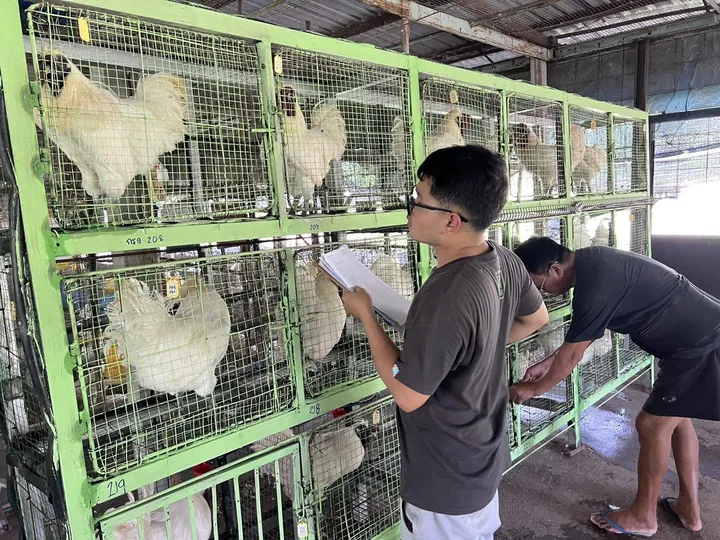
May 2026
Setting up the breeding flock
Kai Dam Nil Kaset breeder cocks moved to mating cages, with records
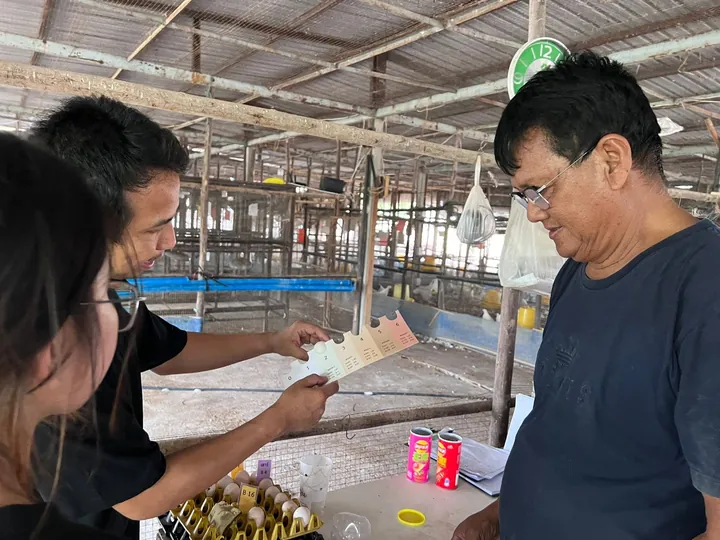
Apr 2026
Egg-quality recording
Shell colour and shell defects, Kai Dam Nil Kaset eggs
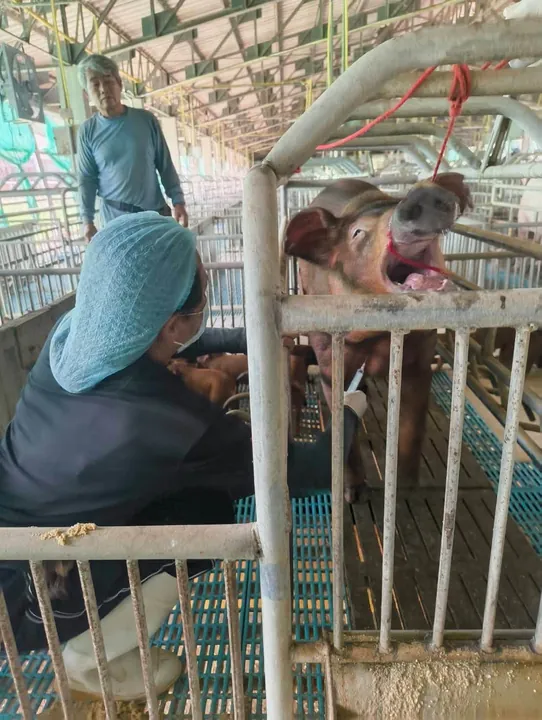
2026
Sampling pigs
The team samples a red-coated pig in a crate
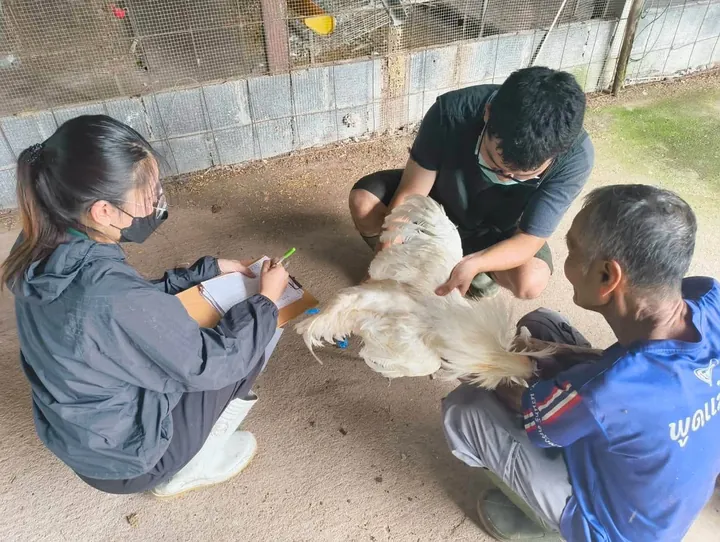
2026
Recording chickens
The team measures and records each bird
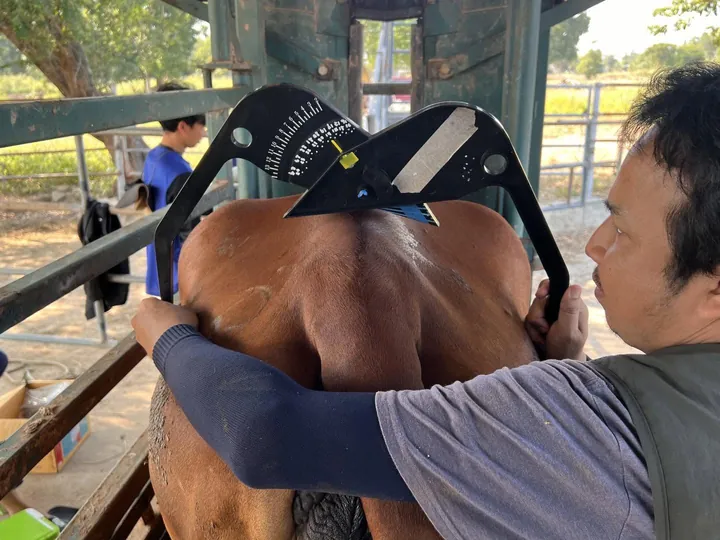
Dec 2025
Body condition scoring
Brahman cows in a cow–calf herd, Suphan Buri
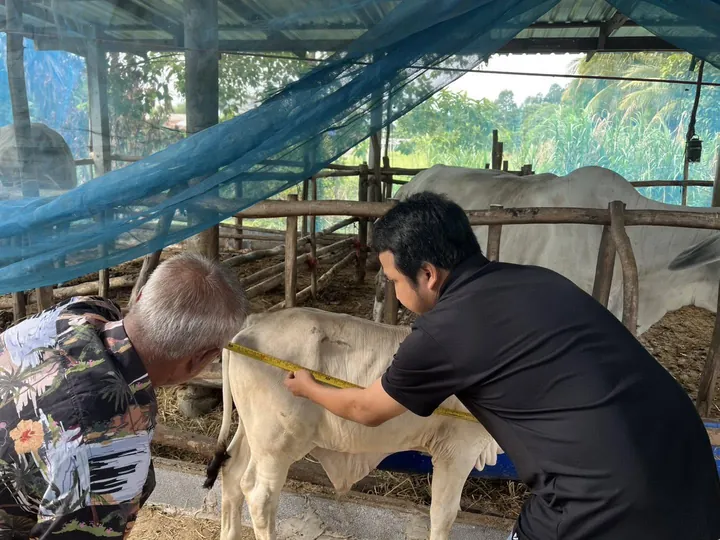
Nov 2025
Weighing cattle by tape
With beef farmers of the Lung Chao Farm network, Nakhon Sawan

Feb 2025
Feed mill study visit
Raw materials, quality-control lab and traceability
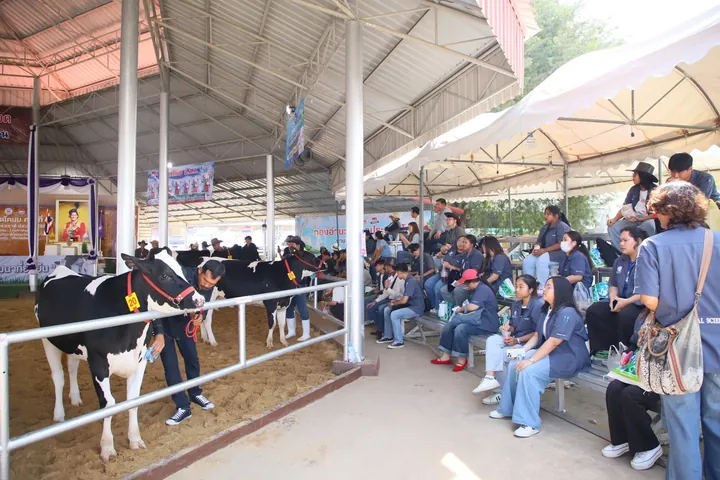
Jan 2025
National Dairy Festival
Graduate students take undergraduates to the show, Muak Lek
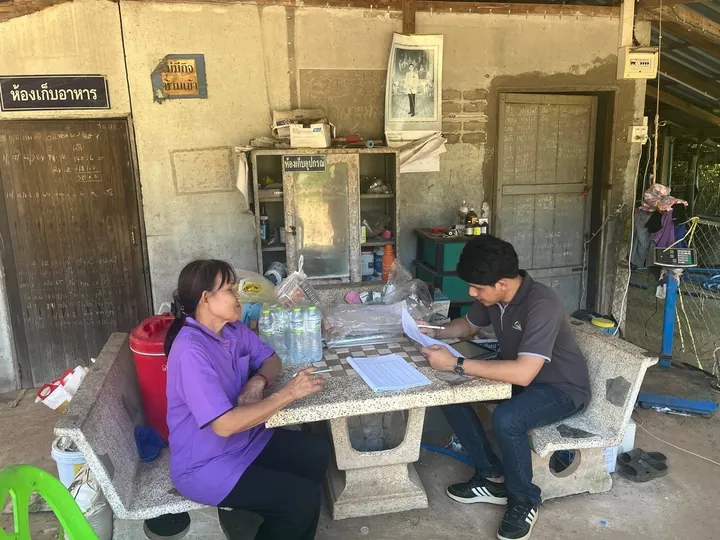
Nov 2024
Farm assessment from farm records
With members of Non Suwan Dairy Cooperative, Buriram
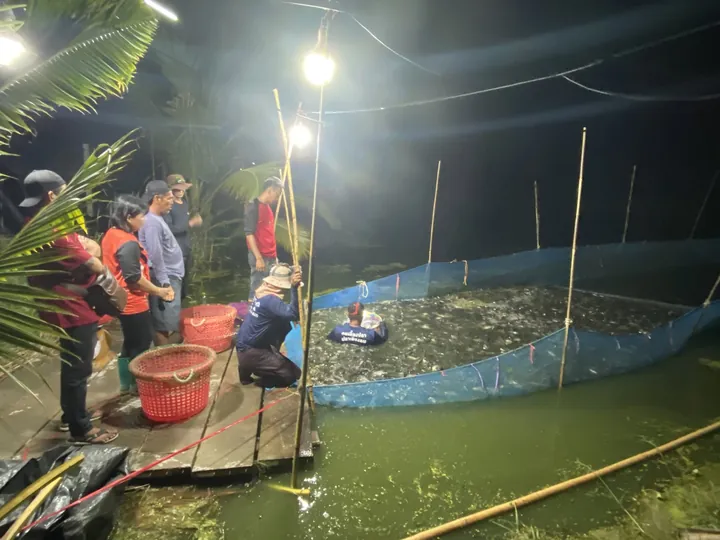
May 2024
Snakeskin gourami harvest
Costs, prices and broodstock selection with farmers, Ratchaburi
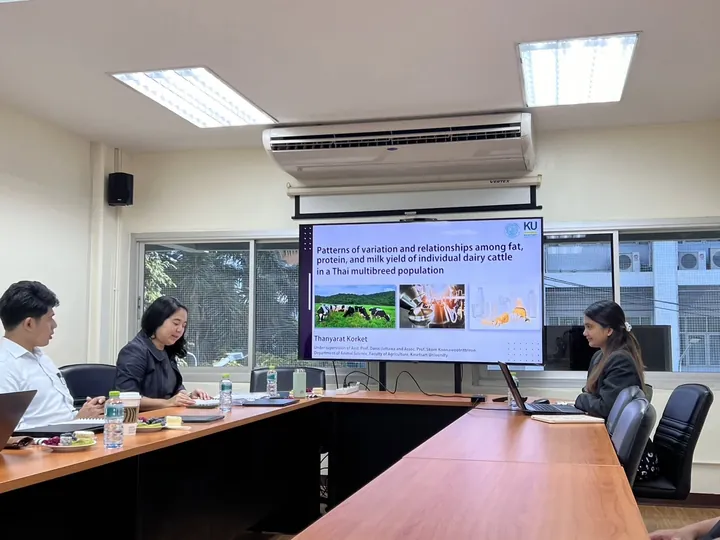
Apr 2024
M.S. thesis defence
Milk fat, protein and yield in Thai multibreed dairy cattle
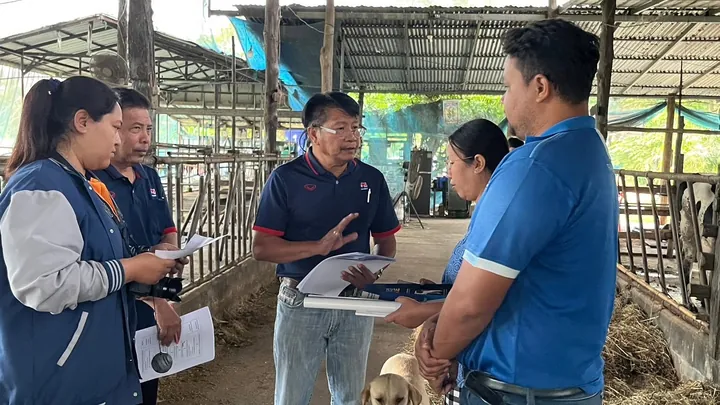
Jan 2024
Dairy farm visits with DPO
Choosing semen and on-farm recording, Sukhothai
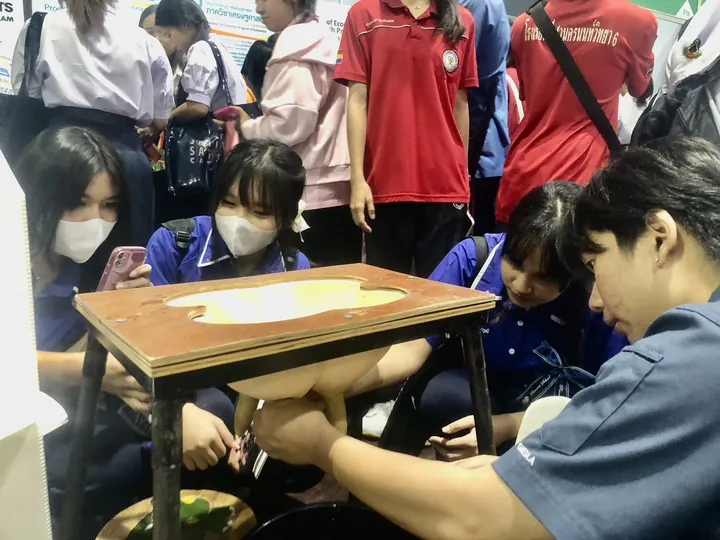
Dec 2023
KU Open House
Animal Science students at the Faculty of Agriculture booth
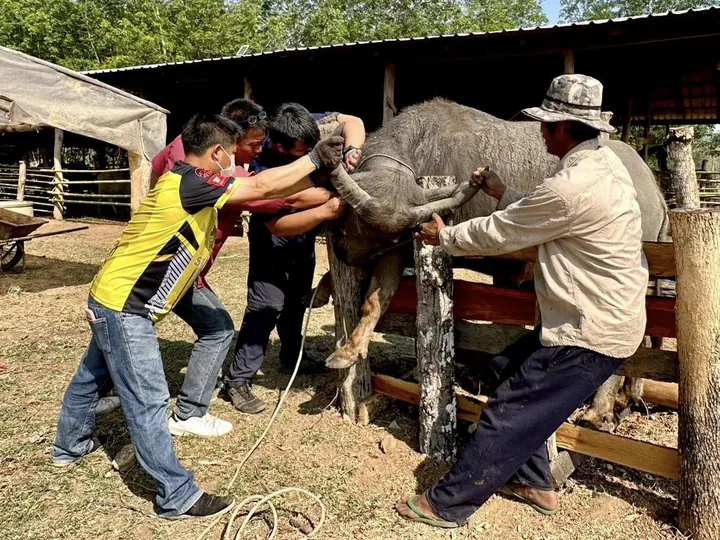
2023
Sampling swamp buffalo on farms
The team with buffalo farmers

2019
Dairy seminar with farmers
Dairy farmers, DPO staff and students
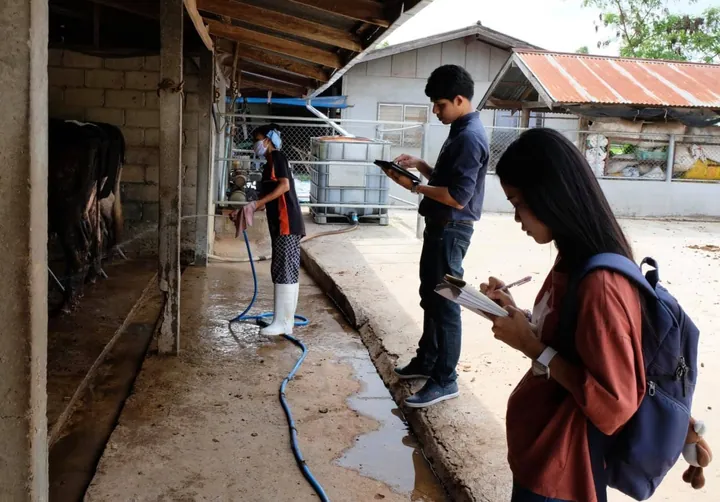
Aug 2019
Farm data survey
Member farms of Khon Kaen Dairy Cooperative
Programs and how to apply
Two degrees, four steps
Both degrees are offered by the Department of Animal Science, Faculty of Agriculture, Kasetsart University (Bangkhen). Prof. Skorn chairs both programs.
M.S. in Animal Science
Research only (Plan A1) or coursework plus a thesis (Plan A2), built on real farm or genomic data.
Ph.D. in Animal Science
Independent research toward publication in international journals, with access to TAGU's partners at home and abroad.
- Step 1
Explore the themes
Read about the six research areas and the papers behind them, and find the question that excites you.
- Step 2
Email Prof. Skorn (recommended)
Before you apply, send your CV and a short note on your research interest to agrskk@ku.ac.th. You will need a research direction for the selection interview, and KU Graduate School scholarships are applied for together with your advisor.
- Step 3
Apply through the KU Graduate School
Apply online to the M.S. or Ph.D. in Animal Science (program code XA28) in one of the Graduate School's three rounds a year. Selection is a written exam and an interview at the department. Ph.D. applicants also need an English test score (for example IELTS 5.5 or TOEFL iBT 61) and a research pre-proposal of up to 4 pages. Dates and fees change each year.
- Step 4
Look for funding
KU Graduate School scholarships include a monthly stipend for international students and a thesis-publication scholarship for Thai students; both are applied for together with your advisor and change each year. Ask about options when you write.
Questions students ask
Ready to start?
Tell Prof. Skorn about yourself and the research you want to do.
Contact as a prospective studentYes. Past graduates came from Ethiopia, Japan and Myanmar as well as Thailand, and one graduated through KU's joint Ph.D. with Nagoya University. International applicants apply through KU's English application and pay an international fee each semester.
Both degrees are regular Thai programs; KU publishes the admission forms in Thai and English. TAGU's international students have written their theses in English. Ph.D. applicants need an English test score, and M.S. students must meet KU's English requirement before graduating. Ask about course language when you write.
A degree in animal science, agriculture or a related field such as veterinary science, zoology, genetics or environmental science. A Ph.D. straight after a bachelor's degree needs a GPA of at least 3.25. Statistics or programming experience helps, and you will build both skills during the program.
KU Graduate School scholarships change each year and are applied for together with your advisor, so ask about funding when you first email Prof. Skorn.
You agree it with your advisor, usually within one of TAGU's six species themes, and present your proposed topic at the selection interview (Ph.D. applicants also submit a 4-page pre-proposal). Mention your interest in your first email.